
You’ve emptied your groceries into the refrigerator, and now you’re left with a mound of plastic bags sitting on your counter. They’ll inevitably end up lying around the house – or stuffed into your garbage can. But what happens to those plastic bags once they go in the recycling? In Midland County, that plastic may end up being converted into the road beneath your feet.
Terry Palmer, PE, Midland County Road Commission (MCRC) managing director, was excited about a new way to recycle plastic.
“I’m always up for something new,” Palmer said. “The day I was running over to one of the job sites to check on a paving project, I was following a garbage truck that had some of these plastic bags billowing out from it and I thought ‘Huh, we might be able to take care of that problem.”
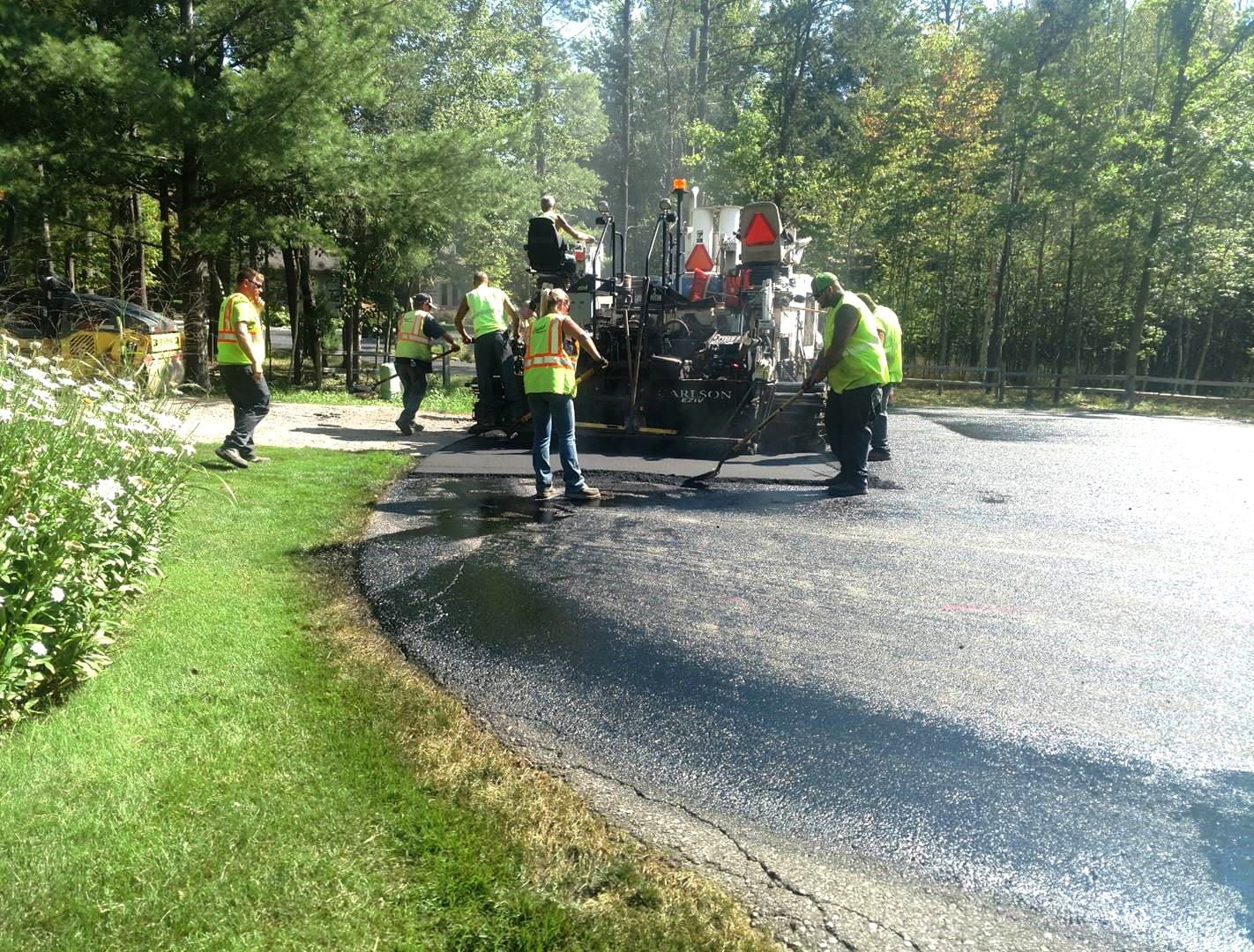
This summer, MCRC paved the first public asphalt road in the U.S. composed of plastics, additive and pavement fabric. Recycling plastic bags and food-grade foam into hot mix asphalt (HMA) is a relatively new concept that’s growing in popularity. The process offers road agencies an innovative, unique way to do their part in conserving the environment.
“They tell us this process uses the equivalent of 117,000 plastic bags per mile of paving, so in essence we gave the equivalent of 300,000 plastic bags new life in these road projects this summer,” Palmer said.
MCRC paved segments of four different roads with recycled material – an ultrathin HMA overlay, and three 1.5”-2” thick HMA overlays used for worse conditions. Over the next few years, the new road segments will be monitored and compared with other roads paved in summer 2019.
To learn more, read the Winter 2019 edition of Crossroads, the quarterly journal of the County Road Association (CRA) of Michigan, which can be viewed digitally or downloaded at https://micountyroads.org/newsroom/crossroads/.